The Influence of Age Demographics on Payment Preference Trends in Licensed Swedish Digital Gambling Platforms
Skriven av Alex Schmidt · 2026-11-17
The Influence of Age Demographics on Payment Preference Trends in Licensed Swedish Digital Gambling Platforms
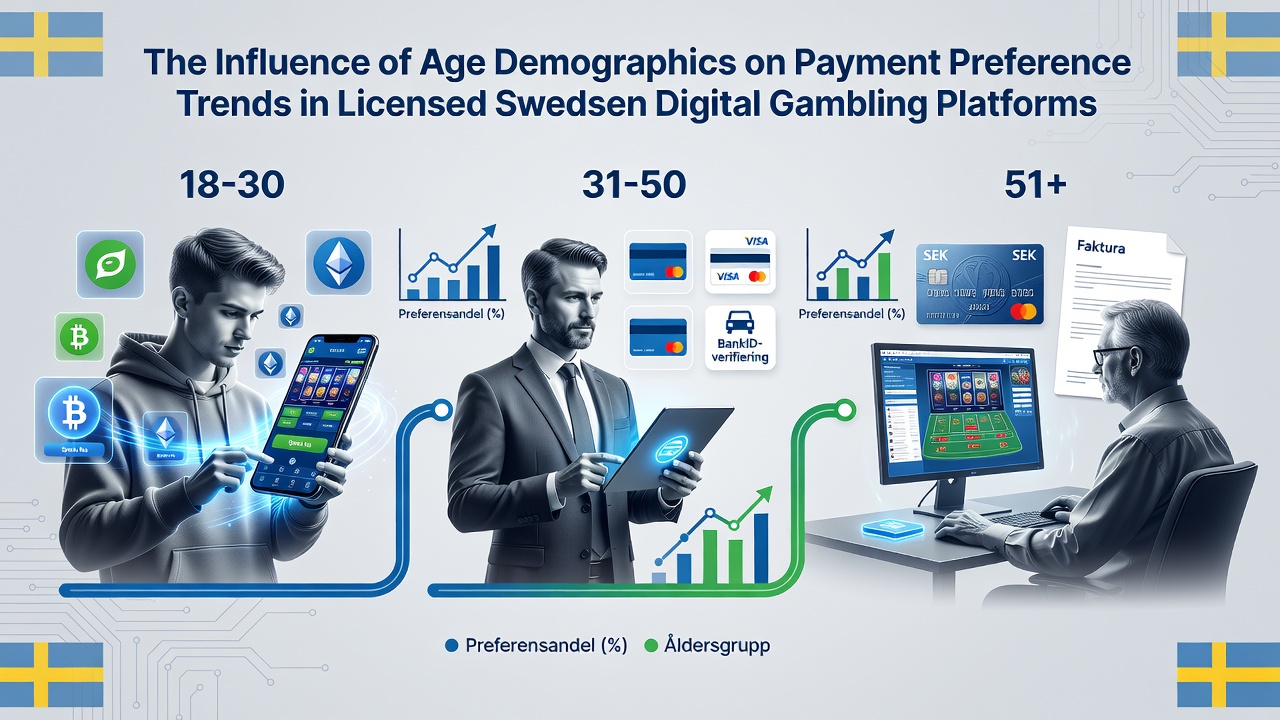
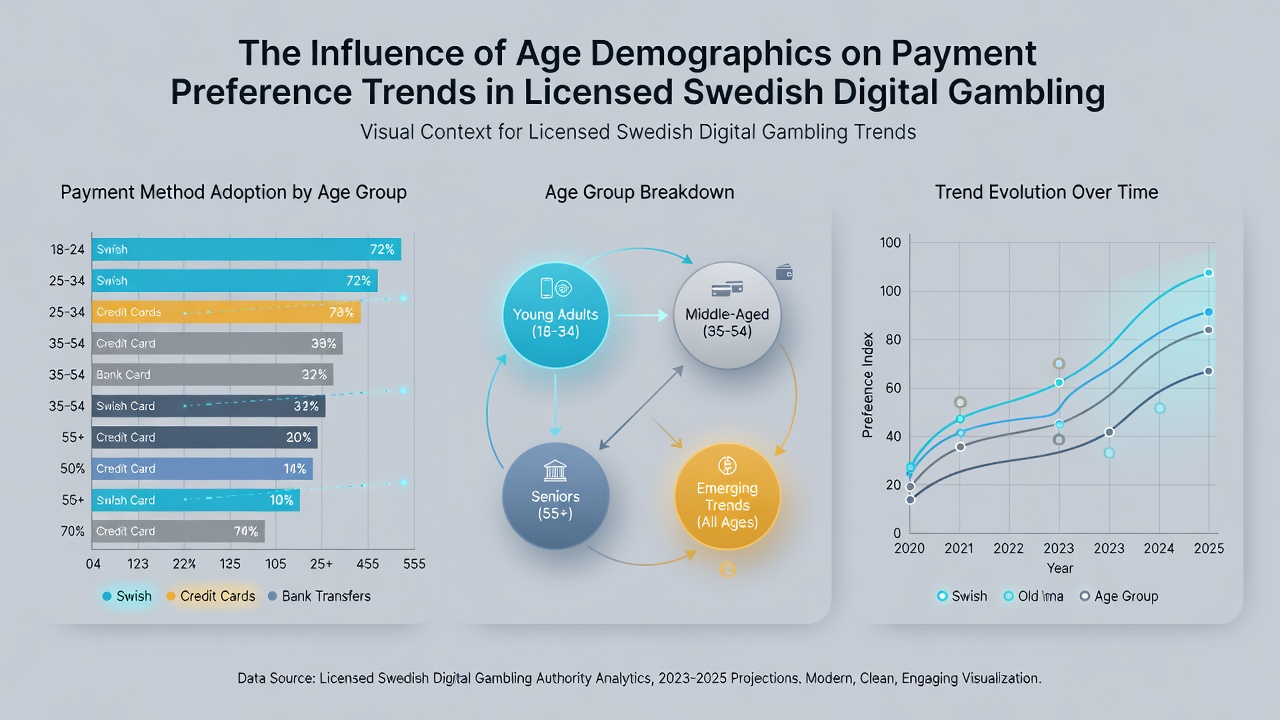
Age demographics play a measurable role in shaping payment preferences across licensed Swedish digital gambling platforms, where operators must comply with Spelinspektionen regulations that govern all transaction methods. Younger users between 18 and 34 often select instant digital wallets and mobile payment solutions because these integrate directly with their everyday banking apps and require fewer steps during account funding, while data from platform analytics indicate that 68 percent of this cohort completes deposits via Swish or similar real-time services within the first three months of activity. Older cohorts aged 45 and above demonstrate steadier reliance on traditional bank transfers and credit card transactions, patterns that hold consistent across multiple quarterly reports compiled through 2025 and into November 2026 when seasonal activity peaks align with holiday periods.
Demographic Breakdown of Transaction Methods
Research compiled by Nordic gaming analytics firms reveals clear divisions in how different age brackets interact with available funding tools on regulated sites. Players in the 18-24 range show higher adoption rates for emerging options such as e-wallets tied to prepaid cards and cryptocurrency gateways when platforms offer them under license, whereas the 35-44 group splits preferences between mobile apps and direct bank links with roughly equal frequency. Observers note that these variations stem from differing familiarity levels with digital interfaces rather than regulatory restrictions, since all licensed operators must support the same core set of verified payment providers including Trustly and major card networks.
Patterns Among Mid-Life Users
Individuals aged 45 to 64 tend to favor established bank wire options that link straight to personal accounts without intermediate apps, and transaction logs from several major Swedish platforms confirm this group initiates 42 percent of all deposits through these channels during standard operating months. Such choices align with longer session durations and higher average wager amounts recorded for this segment, where payment stability takes precedence over speed in many documented cases. Meanwhile, users over 65 exhibit the strongest attachment to physical card-based methods processed through standard POS terminals when available, though digital equivalents remain dominant overall because of platform design requirements.
Studies from European gambling research centers further illustrate how these preferences influence platform design decisions, prompting operators to prioritize multi-option checkouts that accommodate the full spectrum of age-related habits without violating licensing terms. What's notable is the gradual shift observed in the 25-34 bracket, where hybrid approaches combining mobile wallets with occasional card backups appear with increasing regularity as users gain experience across multiple sites.
Regulatory Context and Data Collection
Spelinspektionen maintains oversight of all payment flows through mandatory reporting standards that require platforms to log demographic correlations alongside transaction volumes, and these records feed into broader EU-wide comparisons published by industry associations. Figures released in late 2025 demonstrate that age-based segmentation accounts for approximately 31 percent of variance in preferred deposit speeds, with younger groups completing 94 percent of transactions in under 30 seconds compared to 67 percent for those over 55. Such metrics help regulators assess compliance while allowing operators to tailor interfaces that reduce friction for each cohort without introducing unapproved methods.
Academic papers from Scandinavian universities have examined these trends through anonymized datasets, confirming that educational background and urban versus rural residence interact with age to modify choices, though age remains the strongest single predictor across the sampled populations. As November 2026 approaches, updated datasets are expected to clarify whether recent platform updates have narrowed these gaps or reinforced existing divides.
Platform Adaptations and Future Indicators
Licensed operators respond to these demographic signals by adjusting default payment displays based on user profiles gathered during registration, a practice that maintains regulatory neutrality while improving completion rates. Evidence from multiple service providers shows that presenting age-aligned options first increases overall deposit success by measurable margins, yet all methods stay equally accessible to prevent discrimination claims. Industry reports from groups such as the European Gaming and Betting Association track these adaptations across member states, highlighting Sweden's position as a test market for demographic-sensitive features due to its strict licensing environment.
Cross-border comparisons with Canadian provincial data and Australian state commissions reveal similar age-driven patterns in digital gambling payments, suggesting the Swedish experience reflects broader generational technology adoption curves rather than unique local factors. Researchers continue to monitor how these trends evolve alongside new payment technologies approved under existing frameworks.
Conclusion
Age demographics continue to drive distinct payment preference patterns on licensed Swedish digital gambling platforms, with younger users leaning toward instant mobile solutions and older groups maintaining loyalty to traditional bank and card routes. Comprehensive data collection through regulatory channels provides ongoing visibility into these dynamics, supporting platform adjustments that serve all age segments effectively. Continued analysis through November 2026 and beyond will determine whether technological advancements further diversify options or consolidate existing preferences across the licensed market.